
I have thought about not writing this piece, because I did not lose my home.
I have thought about not writing this piece because the wind was blowing the other way on August 1. Because I was lucky. Because I have been on the edge of the Spokane Complex fires, just south of every fire that broke out that day.
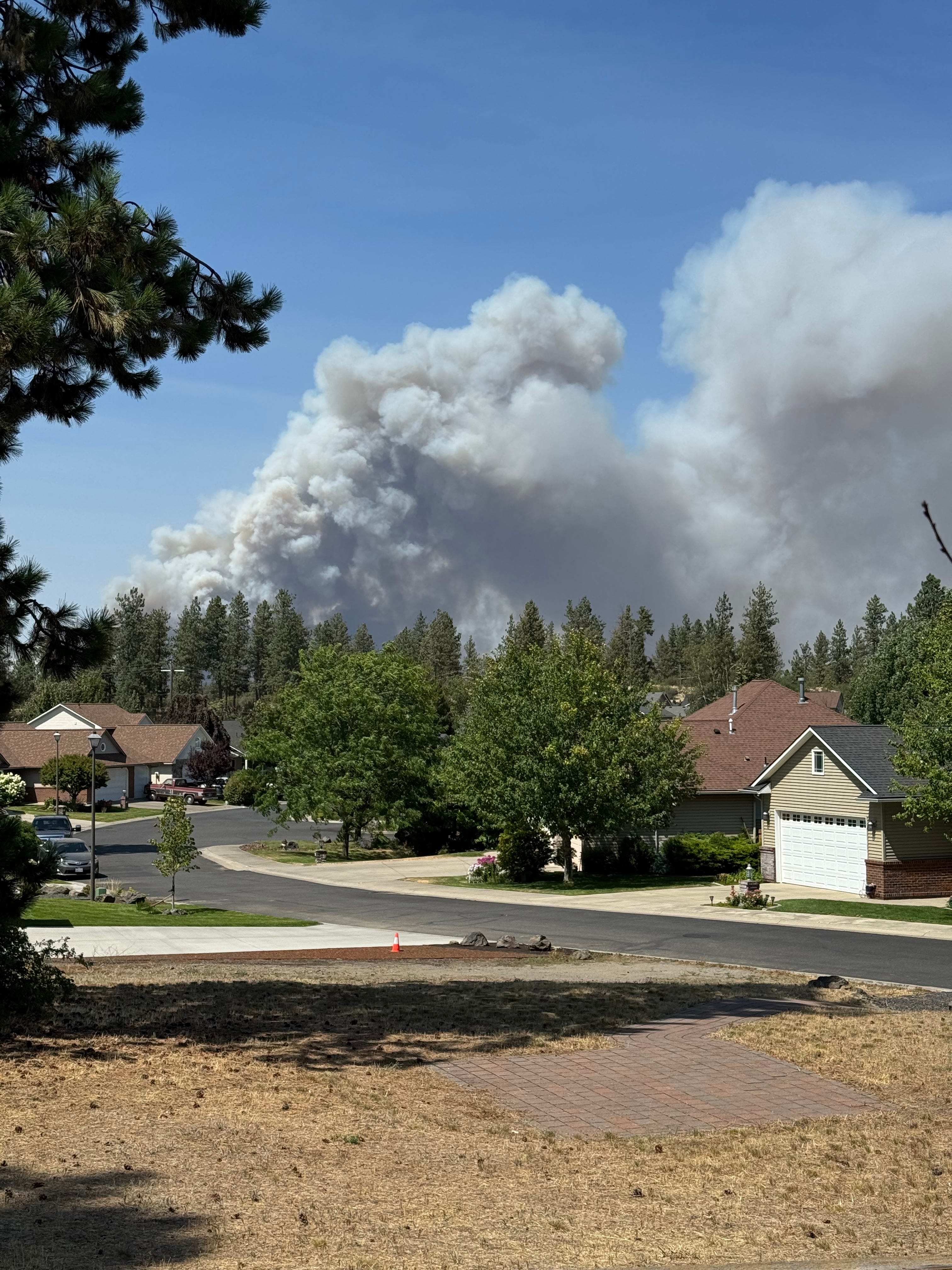
But I did watch the first smoke from the Old Trails fire bloom up while standing on my back porch. I did feel a sick knot in my stomach as the wind gusted hard through the pine trees around me, as I watched the smoke wax gray and then black as it found fuel, as it grew up into its own sort of not-right cumulus cloud.
I did pack an evacuation box when the city cut my power, a precautionary action they took for over 12,000 Avista customers to reduce risk from electrical fire. I realized the gravity of the situation that day, one the National Weather Service had declared a Particularly Dangerous Situation, the perfect storm of drought, low humidity, heat and wind. If a fire started south of our home, which it could at any minute, there was no way anyone was catching it.
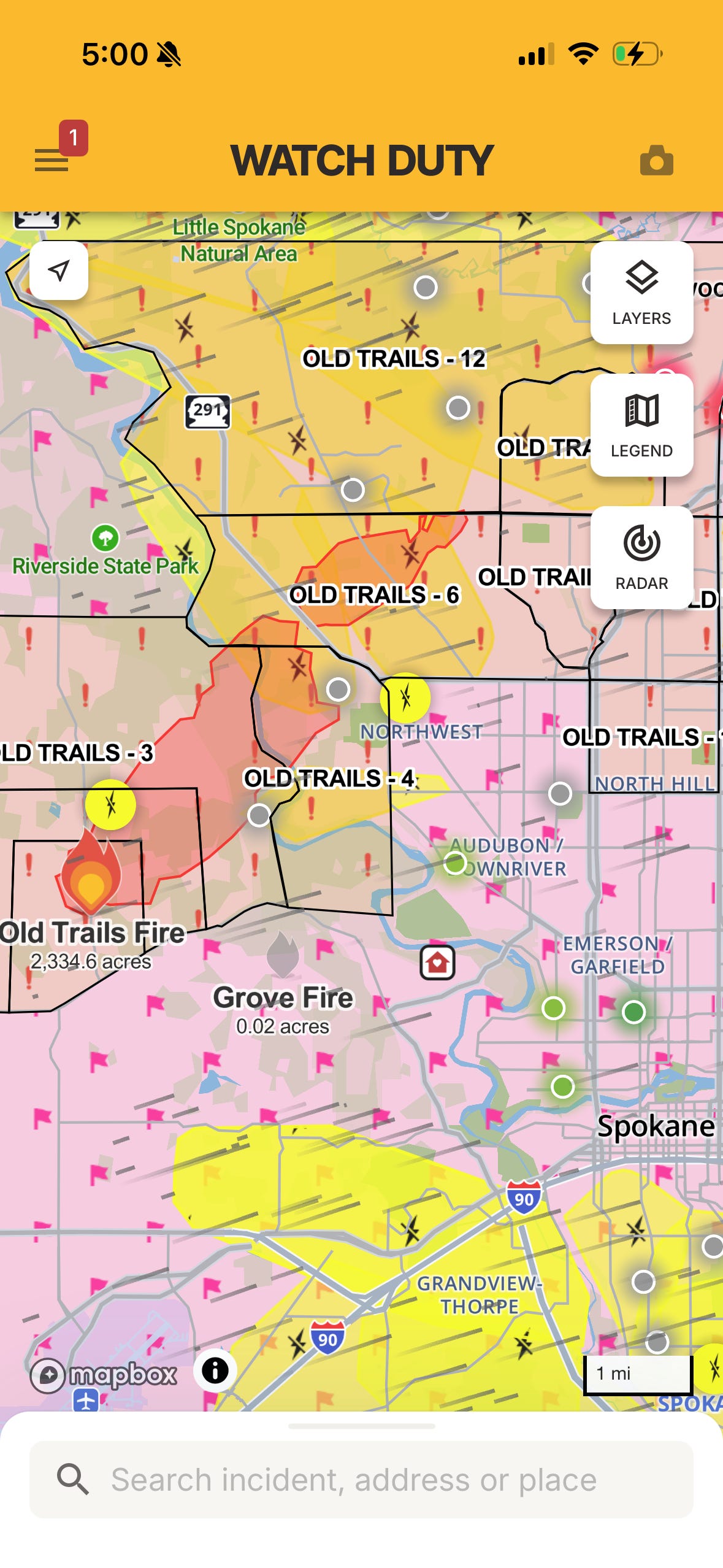
The Old Trails fire, which started five miles north of our home, was the first; it jumped the river to the Indian Trail neighborhood, and two other fires sparked up just after. The Fairview Fire. The Autumn Lane Fire. I use the free Watch Duty app to track wildfires this time of year, which is updated in real time by first responders with evacuation zones and fire perimeters. It pinged with little relief on August 1 as I watched the fires grow, a web of numbered evacuation squares expanding like an out-of-control Etch-a-Sketch, hues of yellow, orange and red, Level 3, GO NOW.
Thousands of people found themselves in red squares that day, evacuation notices given with very little warning. The Spike & Dig volleyball tournament was evacuated as flames licked the pines across the river from the Dwight Merkel Sports Complex, which would burn before sunset. Major arterials became snarled with stand-still traffic as people fled south. The wind was pushing the fire so quickly it was hopping like a forest fire rather than a wildfire that day, leaping from pine crown to pine crown, rendering fire lines useless, combat-able solely with aerial drops of water and fire retardant. The roar of plane engines filled the sky. And stayed.
By evening, all three major fires were 0% contained. Night fell. The wind continued.
Spokane was thrown into the national spotlight on the 5:00 news. The Old Trails fire had jumped the Spokane River, already low from the drought declared in April. Everyone I knew tuned into the news that night, desperate for information, unable to look away. We saw entire neighborhoods reduced to standing rows of chimneys. We saw cars melted in their driveways. We saw video footage of houses as they burned, their 2x4 skeletons illuminated for just a moment in a bright flood of flame. It was gut wrenching. It was grief. And I’m not sure my nervous system has fully reset.
High Country News was quick to cover the Spokane Complex fires: “The Spokane burns show that not even suburbia is immune to wildfire,” they wrote. For the area that burned in the Old Trails fire caught everyone off guard. It was not a high-risk neighborhood for wildfires. Its burning was historic in that it further defined where we might expect wildfires to burn, which is another way of saying that we’re losing the ability to predict where wildfires will burn. The Old Trails fire echoed the 2025 Palisades fire of California, proving that massive wildfire destruction was possible outside of the “wildland-urban interface,” where brushy fuels meet homes on the outskirts of urban places and towns. The Indian Trails neighborhood was at the heart of Spokane. No one expected the deep suburbs to burn.
Here’s the thing that has been compounding my survivor’s guilt, the strange situation where I get to move on with my life when hundreds of my neighbors to the north do not: my home is in a far higher wildfire risk area than the neighborhood that burned. I live where the dry Cheney flats thread into the first ponderosa pines of southwest Spokane. I have one route out of my neighborhood, which is three miles of cul-de-sacs and curving roads when I run it on foot. The Spokane Fire Department recognized this; last summer, our neighborhood was used for an evacuation study, everyone receiving notice to participate in a drill where they should collect their valuables and exit the neighborhood while the fire department watched the flow of traffic and human decisions.
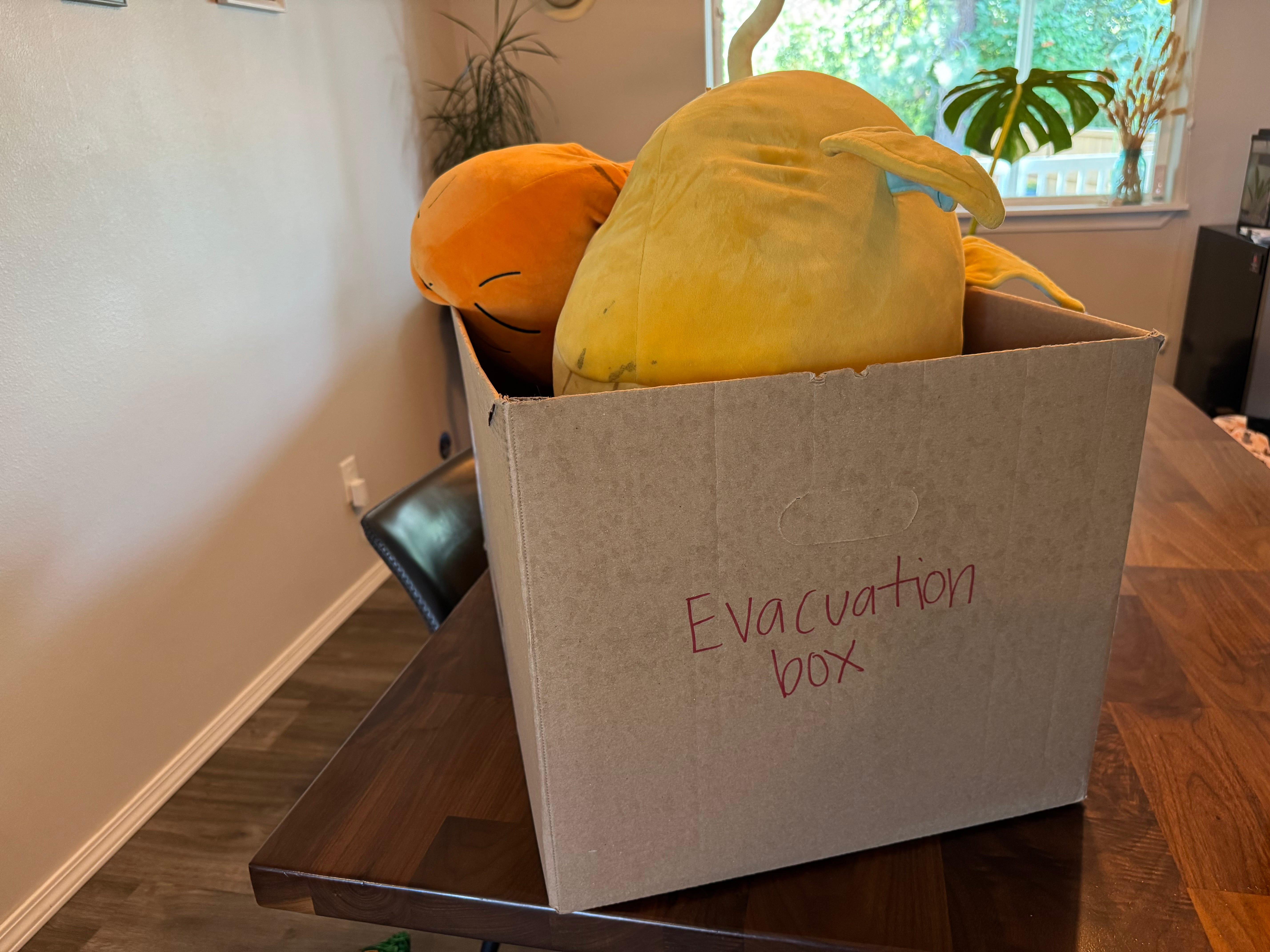
Our neighborhood didn’t burn. It was statistically more likely to do so. And I’ve been trying to figure out how to sit with that, with how our fire-riddled West is spinning out of control, with how to help the people who lost their physical and emotional sense of home. With how many months and years our community will be reeling, and the long road ahead to recovery. I’m still working out the emotion behind telling my son he had to pick his favorite three stuffed animals for the evacuation box. Not ten. Not even five. And watching him panic.
The unhealthy level of smoke we’ve had over the city since August 1 has felt appropriate. It feels like a pause, like a smothering, like grief made manifest in toxic little air particles. Surely, I’ve been thinking, people are listening now, right? Surely, the ferocious burning of this city will imprint on our national hearts and drive us toward collective climate change. Surely, this was enough of a sign. Surely this shows that Palisades was not an anomaly. Surely people can share in this grief even when it’s not their own backyard.
My heart burns a little when I take an honest look at those questions.
My family of four evacuated on August 1 when the city cut our power, even though we weren’t in an official evacuation zone. We packed a box of important papers, notebooks, passports, baby journals and a few small mementos from my grandmother. We let our kids pack extra stuffed animals, because we had the time. We drove two hours west to my parents’ farmhouse for a night, for they had power and dinner and no immediate threat of fire. When we woke the next day, smoke had rolled into the Columbia Basin from another wildfire. The gusts on August 1 had fanned the Little Giant Fire burning south of Chelan, and it had jumped to the north end of the lake, tearing through fresh, dry fuel. I stood on my parents’ front porch and watched gnat-sized pieces of ash drift down all morning long. It reinforced that escape was an illusion.
I returned to Spokane on August 2, and by Monday the National Guard was called in, helping to secure the fires as the winds died down and looping back to mop up hotspots. Our Spokane community came together in a truly beautiful way in response, in aid. It is still coming together to hold up those who were most affected. But I can’t keep away a twist of dread; if not my house, if not this summer, then when?
Today, on August 11, hazards still smolder; the fire district has issued warnings for fire-weakened trees and hot ash pits, toxic vapors, and burned structures and vehicles, which are still holding residual heat. The last few evacuation zones were lifted just this afternoon. People are toeing through the ash to see what they can claim from the rubble.
We had another red flag warning on the Saturday following the fires, August 8. And I’m not sure anyone knew how to hold that forecast. Mid-week, I swapped fire and forecast info with a neighbor as she walked her dog in the smoke-choked dusk; we both had evacuation boxes still sitting on our dining tables, ready to go. She and her husband had each selected their favorite bikes to strap to their car racks. And my husband asked which ones they were taking. She’d picked her road bike. He’d picked his mountain bike. I guess those are the kind of conversations you have as you try to hold each other at the end of the world. As you twist out your heart toward an uncertain future, full of hope and grief tattooed with char.
I’m very glad you decided to write and share this piece, Lisa. Your experiences and big-heartedness on the page are so important.
Thinking of you and everyone in Spokane.