On Going Home
And how we interact with memory-laced places.

Each time I go home, I get a little lost.
I get lost in the pull of deep memory, in the sweep of the land, in physical details like how the hills crumple the light. Everything about the place makes me circle back. Makes me think years are less linear than we arrange them, more like eddies in a current, place-hooks being a sensory thing that let us play with time.
In the Columbia Basin, it’s the wind that shapes our days. It’s a caress and exfoliant and irritant and joy. It blew hard while I was home this week, and as soon as my dad took the ribs off the smoker by the back porch, we retreated inside, skin gritty from fine field dust.
Other instances of re-immersion were softer. The hummingbird moth that I caught at work on the petunias by the back door at dusk. The basalt cliffs of the Moses Coulee, bright with lichen orange and green, reminding me how old rock pressed and defined. Each visual reminded me, yes: this was the bone-deep place that had shaped me. By my third night home, the sunset drew me out like a magnet. Had me stand a good while in bare feet as it waned from gold to pink to blue. It had been some time since I’d stood barefoot in field dirt, and I felt joy swell in revisiting that version of me.
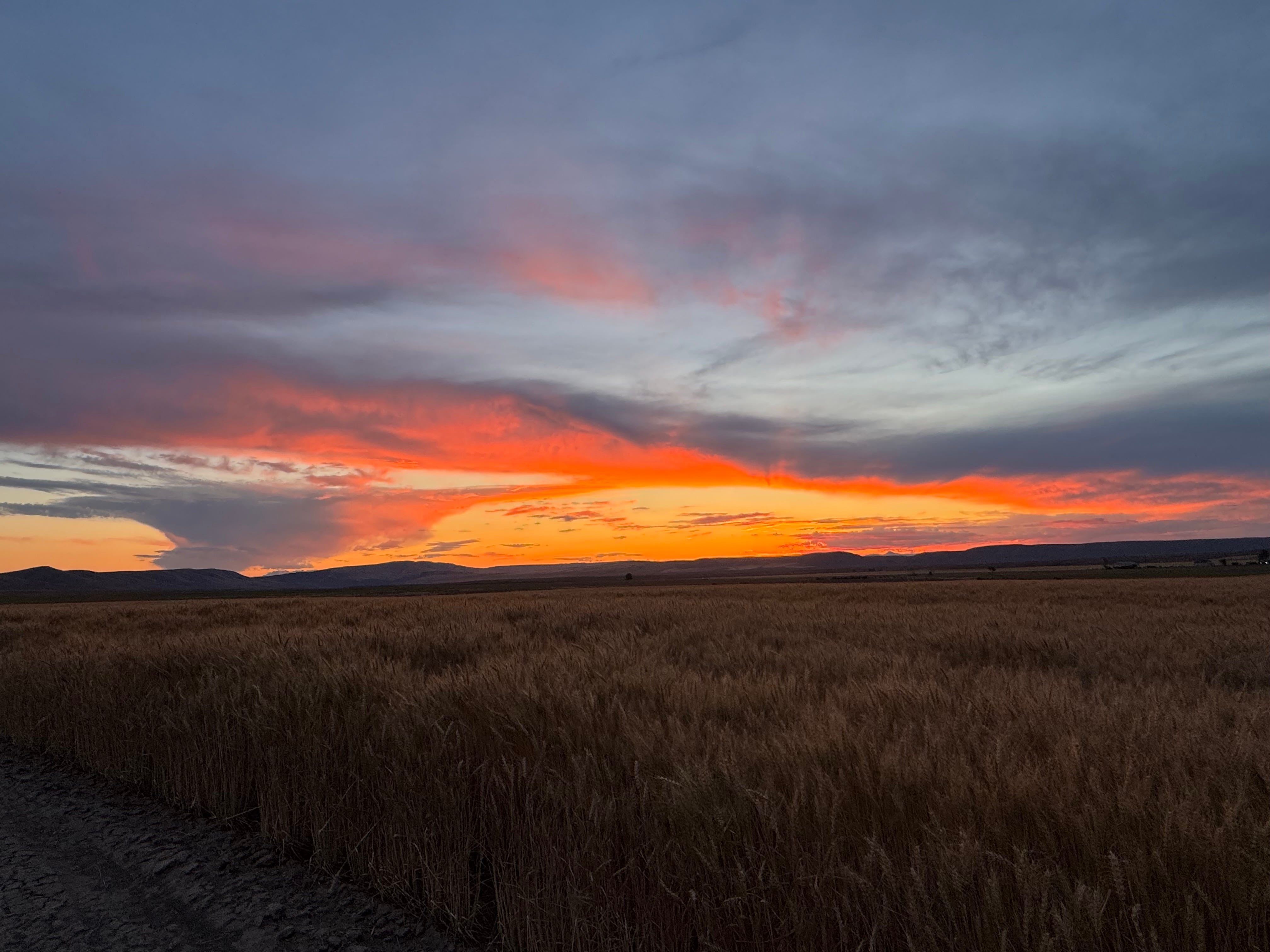
A defining question in my literary work is how we are influenced by place; how places shape and hold us, how we carry them as we leave, and how—or if—we can return to them. I don’t have the answers to those questions. But each time I jump between worlds I get a stronger sense that places hold memory like a physical thing.
As much as my home place has stayed the same, some significant things have changed with the climate. Most recently, a windstorm knocked over an 80-foot Douglas fir against the south side of the farmhouse, taking out part of the chimney. An old CB radio tower, which was how we tuned into the field crew in the ‘90s from our living room, had prevented significant damage to the house. But there was enough for my dad and his brother to grab a chainsaw, climb the roof, and get to work. By the time I drove the S-curves on the highway up to the farm, the tree had been cleared, and everything about the visual approach was altered. Where once an island of trees had suggested a home, the green pitch of our farmhouse stood plain as day.
The fallen tree was the main topic upon arrival, and I stood with my parents and kids by the gaping hole that the roots had left. The absence of tree had opened up a new slice of sky. I asked my dad if he planned to plant another tree — maybe one that would top out at 30 feet, like our pie cherry, something that wouldn’t become a threat to the house again. He shrugged and said he’d be dead before another tree became a threat anyway. His concern that week was righting the chimney stack and installing a new insert, getting the fireplace up and running by fall.
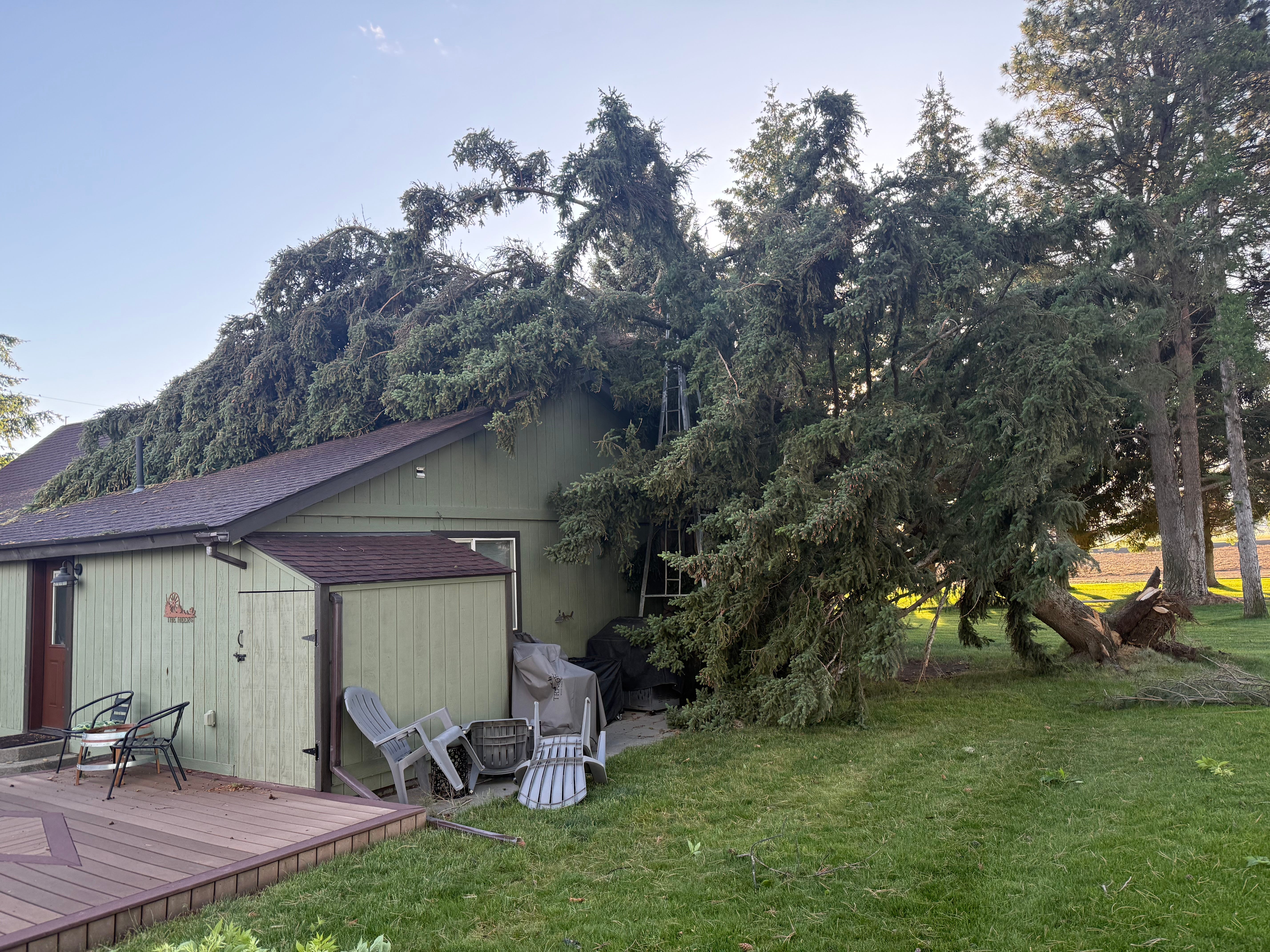
The places we’re deeply familiar with change all the time. So do we. When we’ve cached memories in a place, that can be a hard thing to admit. How do we continue to inhabit the lands we love with depth and recognition of that change? How might we apply the loss and growth in a way that sustains both us and the land?
These days when I’m home, I run laps in the dirt fire strip my dad plowed around the property. It gives a buffer of non-vegetation between acres of wheat and the brush and trees of where we live, a protection from wildfires that we didn’t used to need. I kick up hard-packed field dirt as I run, dodging the pebbles that have been scoured up by the wind. Each time I make a circle, I can see my tracks from the round before. I imprint, I exhale. Nod to past me. Carry on laced with dust.